

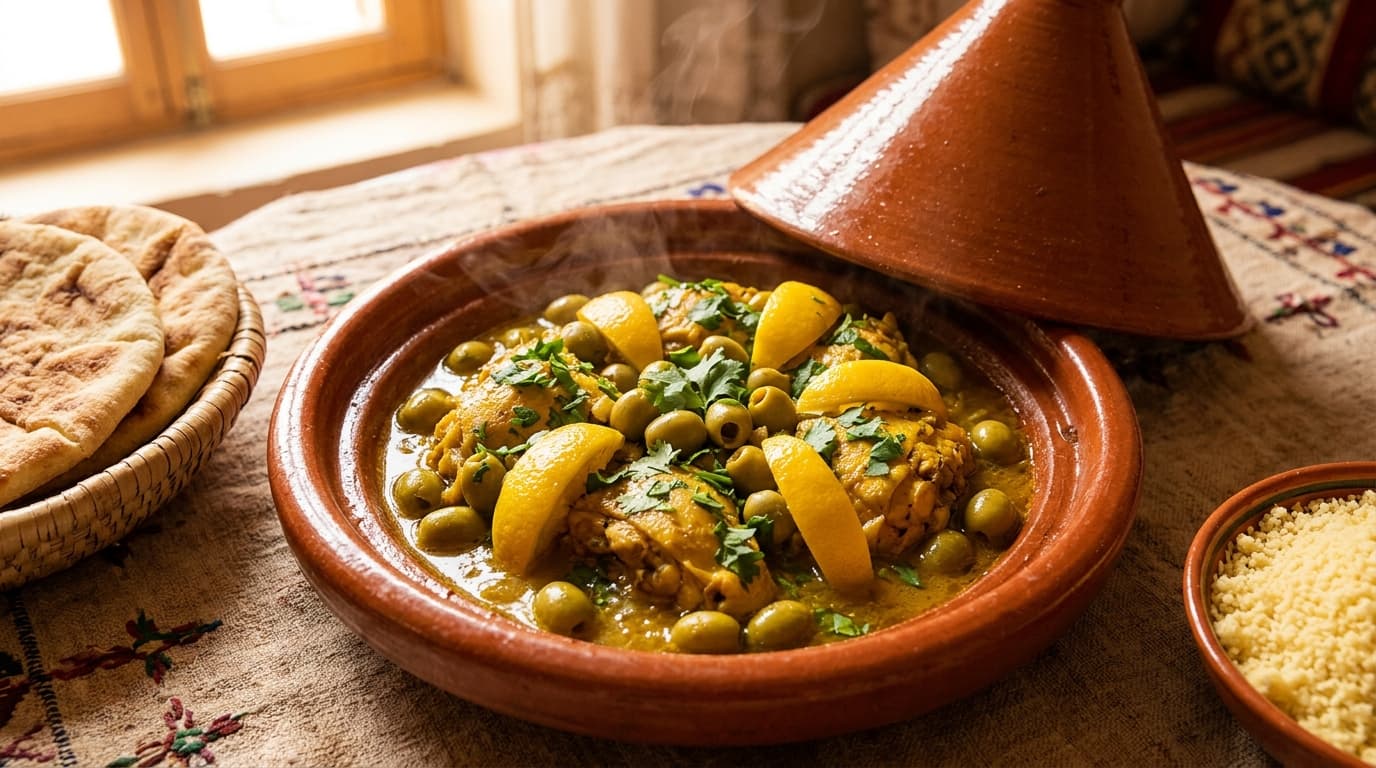
Moroccan Chicken Tagine with Preserved Lemon & Olives
Bone-in chicken braised low and slow with preserved lemon, briny green olives, saffron and ginger — the classic Moroccan chicken tagine, made in a clay tagine pot or a Dutch oven.
Prep Time
20 min
Cook Time
70 min
Total Time
90 min
Servings
4
Difficulty
Medium
The Moroccan chicken tagine with preserved lemon and olives is the dish that draws most people into the country's food, and it's easy to see why. Bone-in chicken is braised slowly in a shallow pot until the meat is so tender it nearly comes away from the bone, while a sauce of onions, saffron, ginger and turmeric turns thick and glossy. The preserved lemon — salt-cured until its rind becomes soft and aromatic — brings a clean, savoury citrus depth that no fresh lemon quite matches, and briny green olives cut through it with their mellow saltiness. Made in a clay tagine pot or a heavy Dutch oven, it is a one-pot meal that rewards patience, and the sauce is never spicy-hot — just deeply savoury and gently perfumed. Serve it straight from the pot with couscous or warm flatbread.
Why You'll Love This Moroccan Chicken Tagine
- Preserved lemon and green olives turn a simple braise into something bright, savoury and memorable.
- Bone-in chicken stays juicy through a long, gentle cook and is the most forgiving cut for beginners.
- Everything happens in one pot on the stovetop, with about 20 minutes of hands-on work.
- It works in a traditional clay tagine or a regular Dutch oven — no special equipment required.
- The sauce only gets better overnight; leftovers are genuinely as good as day one.
The Ingredients, and What They Do
- Bone-in chicken pieces (thighs and drumsticks). These braise for an hour without drying out: the skin holds in moisture and the bones add depth to the sauce. 1.5 kg feeds four with room for seconds.
- Preserved lemon. Lemons cured in salt until the rind softens and the sharpness mellows. You use the rind, not the pulp — it adds the clean citrus brightness this dish is known for.
- Green olives. Choose briny, fruity green olives; their saltiness balances the lemon. Pitted or unpitted both work, though unpitted olives hold their texture better.
- Saffron. A few threads give the sauce its pale-golden colour and gentle floral note. Soak them in warm water before adding, so the colour and perfume release.
- Ground ginger and turmeric. Ginger brings a warm bite and turmeric adds colour and earthiness; together they are the backbone of the sauce.
- Fresh cilantro. Stirred in at the very end for freshness. The stems can go into the braise earlier — that is where the flavour lives.
How to Make Moroccan Chicken Tagine
The method is simple: soften the onions, toast the spices, brown the chicken, then braise gently until tender. The full step-by-step instructions below walk through each stage, including when to add the preserved lemon and olives and how to know the chicken is done. The single most important habit is keeping the pot at a gentle simmer — a few bubbles, never a hard boil.
Moroccan Tagine Pot vs Dutch Oven
A clay tagine pot is traditional and excellent. Its cone-shaped lid traps steam and returns it to the braise, so the pot keeps itself moist over low heat. But you do not need one: a heavy Dutch oven or a shallow, lidded casserole behaves almost identically. What matters is gentle, covered cooking — the seasoning and the technique matter far more than the vessel. Cooking times vary by a few minutes depending on the pot and the size of the chicken pieces, so judge by how the meat feels rather than by the clock.
Tips for the Best Moroccan Chicken Tagine
- Go easy on the salt. Preserved lemon and olives are already salty; season lightly at the start and taste at the end.
- Rinse the preserved lemons well and scrape away the pulp if yours are packed in heavy salt.
- Keep the heat low. A lazy simmer is what makes braised chicken impossibly tender.
- Do not drown the chicken. The liquid should come partway up the pieces, not cover them, so the sauce stays concentrated.
- Reduce the sauce at the end. Uncover and simmer a few minutes until it thickens and glistens.
- Use bone-in pieces. Boneless chicken cooks faster but can turn dry in a long braise (see the substitutions below).
What to Serve With Moroccan Chicken Tagine
The tagine is a complete main; it just wants something to carry the sauce.
- Steamed couscous is the classic pairing, and it soaks up the sauce beautifully. For a full spread, try our Moroccan Couscous with Seven Vegetables.
- Warm flatbread for scooping — our flaky Msemen is ideal if you have time.
- A simple salad of greens dressed with lemon and olive oil to cut through the richness.
- If you are building out a Moroccan meal, add a Harira for the first course, a Moroccan Kefta Mkaouara, or the Lamb Tagine with Apricots & Almonds for a lamb night. Browse the full collection on our Moroccan recipes page.
Storage and Reheating
Refrigerate cooled leftovers in an airtight container for up to 3 days. Reheat gently in a covered pot over low heat with a splash of water, or in 30-second bursts in the microwave; avoid high heat, which dries the chicken out. The tagine freezes very well for up to 3 months — thaw overnight in the fridge and reheat gently. The preserved lemon and olives hold up perfectly.
Frequently Asked Questions
Can I make chicken tagine without a tagine pot?
Yes. A heavy Dutch oven or lidded casserole with a lid works just as well. Use the gentlest simmer you can, and extend the braise by a few minutes if the pot loses heat more slowly.
What is preserved lemon, and can I substitute it?
Preserved lemon is lemon cured in salt for several weeks, which softens the rind and turns its bitterness into a gentle, perfumed citrus flavour. There is no perfect fresh substitute — the closest is to add strips of lemon zest during cooking and a squeeze of lemon juice at the end, though it will not be the same. Preserved lemons are available at Middle Eastern grocers and online; you can also cure your own.
Can I use chicken breast instead of bone-in chicken?
Boneless breast will dry out in a long braise. If that is all you have, use boneless thighs instead, or braise breasts for roughly half the time, until just cooked through.
Do I eat the preserved lemon rind?
Yes — the softened rind is the point, and it spreads a gentle citrus flavour through the sauce. Cut larger pieces into strips before serving so everyone can enjoy them.
Which olives are best?
Use briny green olives — manzanilla or similar. Avoid sweet or kalamata-style olives, which would change the flavour balance entirely.
Can I make this ahead?
Yes. Like most tagines, it tastes even better the next day, once the flavours have settled. Make it up to 3 days ahead and reheat gently before serving.
Ingredients
- •1.5 kg Bone-in chicken pieces (thighs and drumsticks) (skin on)
- •2 Preserved lemons (rinsed, pulp removed, rind kept)
- •1 cup Green olives (drained; briny, not sweet)
- •2 medium Onions (finely chopped)
- •4 cloves Garlic (thinly sliced)
- •1 tsp Ground ginger
- •1 tsp Ground turmeric
- •1/2 tsp Saffron threads (soaked in 3 tbsp warm water)
- •1/2 tsp Ground black pepper
- •3 tbsp Olive oil
- •1 1/2 cups Water or chicken stock (warm or at room temperature)
- •1/4 cup Fresh cilantro (chopped, plus more to serve)
- •Sea salt (to taste — add at the end, and go light)
Tips
Preserved lemon and green olives are already salty, so season lightly at the start and taste before adding any salt. Rinse the preserved lemons well and scrape away the pulp if they are heavily salted. Keep the heat gentle for the whole braise, and let the sauce reduce at the end until it is thick and glossy.
Instructions
- 1
Prep the ingredients
Pat the chicken dry and season lightly with black pepper — hold off on salt for now. Halve the preserved lemons, rinse them well, and scrape out and discard the pulp, keeping the rind. Drain the olives, finely chop the onions, and thinly slice the garlic. Crumble the saffron threads into 3 tbsp (45 ml) warm water and set aside.
- 2
Soften the onions and toast the spices
Warm the olive oil in a shallow heavy pot or tagine over medium heat. Add the onion and cook, stirring occasionally, for 8–10 minutes, until soft and golden at the edges. Add the garlic and cook 1 minute more. Stir in the ground ginger, turmeric and black pepper, and cook for 1 minute until fragrant — this wakes up the spices without burning them.
- 3
Brown the chicken and braise
Add the chicken pieces in a single layer, skin-side down, and cook for 3–4 minutes until lightly golden, then turn to coat them in the spiced onions. Pour in the saffron and its soaking water, then add the water or chicken stock — the liquid should come partway up the chicken, not cover it. Bring to a gentle simmer, cover, and reduce the heat to low. Braise for 45–55 minutes, turning the pieces once, until the chicken is tender and the meat near the bone pulls away easily.
- 4
Add the preserved lemon and olives
Nestle the preserved lemon rind and the olives into the sauce. Cover and cook a further 15–20 minutes over the gentlest heat so the lemon perfumes the sauce without turning bitter and the olives release their brininess. Taste — the sauce should be savoury and bright, not overly salty.
- 5
Reduce the sauce and finish
Uncover and raise the heat to medium-low. Simmer 5–8 minutes until the sauce reduces and becomes thick and glossy enough to coat the chicken. Add a little salt only if needed. Stir in most of the chopped cilantro, simmer for 1 minute, then scatter the rest over the top. Serve hot, straight from the pot, with couscous or warm flatbread.
Rate this recipe
Sign in to rate this recipe.

Amara Chen
Home chef and food stylist obsessed with bright, simple flavors.

Comments(0)
No comments yet. Be the first to say something!